Welcome to June in Shropshire 🌼
The days are long, the sun is shining (mostly!), and our gardens are bursting into life. From the sheltered banks of the Severn to the breezy tops of the Stretton Hills, everything is growing at pace.
June is a month of maintenance and joy — keeping on top of jobs, enjoying the first harvests, and preparing for a summer show. This guide is your friendly, no-nonsense plan for the month ahead.
June Gardening at a Glance
- Plant Out Bedding: Tender summer bedding and veg can go outside now frost risk has passed.
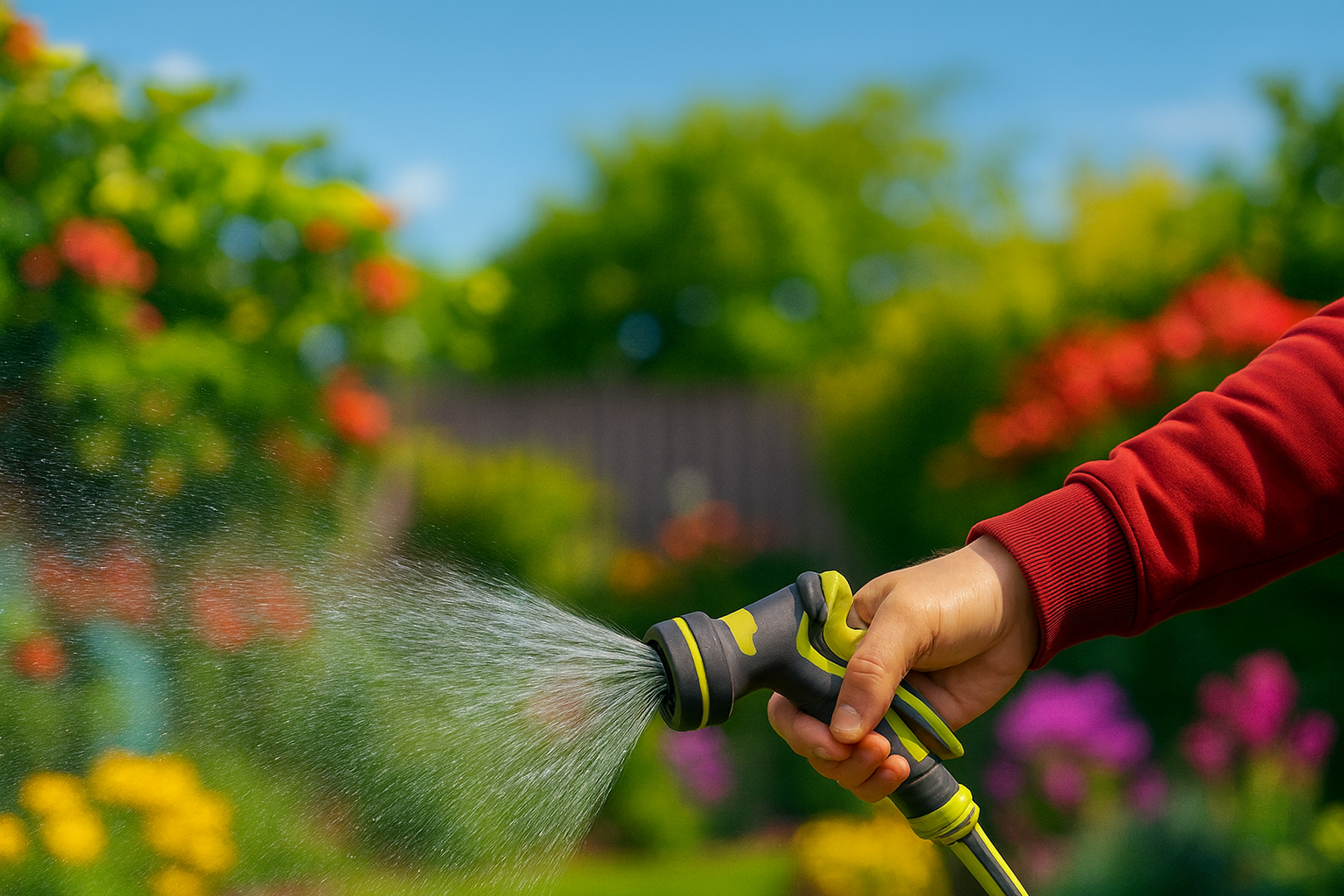
- Water Wisely: Focus on new plants, containers, and veg — deep soak every few days is best.
- Weed Little & Often: Hoe on dry, breezy days to catch seedlings.
- Feed Hungrily: Hanging baskets and pots need regular liquid feed.
- Deadhead & Prune: Keep roses and perennials flowering; prune spring shrubs once finished.
- Mow Higher: Raise mower height to help lawns cope with dry spells.
Weather-Smart Planning for Your Shropshire Garden
June often brings glorious sunshine but also dry spells or heavy storms. Be prepared:
- Plan watering around heatwaves — water mornings or evenings, not midday.
- Protect yourself: high UV means sunscreen and hats are a must.
- After storms, check for waterlogging in pots and new flushes of weeds.
June Task Planner
| Task | Best Window | Why It Matters | Quick How-To |
|---|---|---|---|
| Plant out summer bedding | Early June | Frost risk minimal, tender plants establish quickly | Harden off first. Water well, plant into prepared soil, firm in with compost |
| Pinch out tomato side-shoots | Weekly | Directs energy into fruit instead of foliage | On cordon varieties, remove small shoots growing between main stem & branches |
| Deadhead roses | Throughout June | Encourages repeat flowering | Snip back to just above a leaf with 5 leaflets; for clusters, remove faded blooms & stems |
| Sow biennials | Mid to late June | Gives foxgloves, wallflowers & sweet william time to develop for next spring | Sow in spare soil patch or trays, thin seedlings later |
| Water & feed containers | 2–3 times weekly | Pots dry quickly & nutrients leach fast | Soak until water drains out; feed weekly with liquid fertiliser |
| Earth up potatoes | Early June | Prevents greening & boosts yield | Draw soil around stems, cover halfway. Usually last earthing up |
| Cut back hardy geraniums | After first flowering | Encourages fresh foliage & second flush of blooms | Shear back near base, water & feed to promote regrowth |
In the Kitchen Garden
- Succession sowing: Salad leaves, beetroot & carrots every 2 weeks for steady harvest.
- Beans & courgettes: Plant outside now with sturdy supports.
- Fruit care: Thin apples & pears for larger fruit; net berries to protect from birds.
- Feeding: Start tomato, pepper & cucumber feeds once fruits set.
- Pro tip: Plant courgettes in a shallow dip to channel water to roots.
Caring for Trees, Shrubs & Roses
- Water deeply: Especially for new shrubs & trees in dry spells.
- Mulch generously: Compost or bark keeps roots cool, soil moist & weeds down.
- Prune spring shrubs: Philadelphus, Weigela & Forsythia once flowers fade.
- Tie in climbers: Secure new shoots of clematis, roses & honeysuckle.
Beds & Borders
- The Chelsea Chop: Cut back Sedum, Phlox & Heleniums by one-third early June for sturdier, later flowers.
- Slug patrol: Collect by hand at dusk or use wildlife-friendly deterrents.
- Fill gaps: Add summer bedding plants for instant colour.
Love Your Lawn & Tidy Your Paths
- Mowing: Mow weekly, raising blades in dry weather to protect grass.
- Watering: Established lawns don’t need water; prioritise new turf or seed.
- Paths: Brush patios & paths clear of moss & algae after rain.
Wildlife & Houseplants
- Wildlife: Provide shallow water for birds & hedgehogs. Avoid hedge cutting — nesting season continues.
- Houseplants: Increase watering, feed fortnightly, and shade from strong midday sun.
Decision Checklist
- If it’s a heatwave: Prioritise watering pots & new plants early/late. Postpone mowing.
- If it’s been wet: Weed and check pots for waterlogging; patrol for slugs.
- If you have one hour: Deadhead roses & perennials — quick task, big impact.
- If plants are ready: Plant summer bedding & tender veg outdoors.
Here to Help in Shrewsbury
June is a month to savour your garden. Take time to enjoy it while keeping on top of key jobs. If you need tailored advice, visit us at Love Plants in Shrewsbury — our team is here to help.
Disclaimer
This article provides general gardening guidance. Always consider your garden’s specific soil, aspect, and microclimate. Follow product and safety instructions when using tools or treatments.
Frequently Asked Questions (FAQs)
When should I sow seeds for next spring’s flowers?
Mid to late June is ideal for biennials like foxgloves, wallflowers and sweet william. They establish through summer and flower next spring.
How often should I water hanging baskets in hot weather?
Check daily in heatwaves. You may need to water once or twice a day. If the top inch of compost is dry, water thoroughly.
What height should I mow my lawn in June?
Aim for 4 cm (1.5 in). Raise to 5 cm (2 in) or more in dry spells to protect grass from stress.
How do I deadhead roses?
Snip spent blooms back to the first leaf with 5 leaflets, or remove entire faded clusters. This encourages repeat flowers.
When should I start feeding tomato plants?
Begin feeding with a high-potassium fertiliser once the first fruits form. Apply weekly as per packet instructions.
How can I stop lettuce bolting in summer heat?
Provide partial shade, keep soil consistently moist, and choose cut-and-come-again varieties less prone to bolting.